Every collector meets the same small decision, usually at an awkward moment: a new stamp is in your hand, the album is open, and it has to go somewhere. Hinge or mount? The right answer depends less on habit than on what is printed on the back of that stamp, what it is worth, and how you want the page to look when you come back to it in ten years.
A stamp hinge is a narrow strip of thin, gummed paper, folded into a small V. One arm sticks to the album page, the other to the back of the stamp. The stamp stays put, but it is held by adhesive — and the adhesive touches the gum, the paper fibres, or both. Older pressure-sensitive hinges were the villains of the hobby; modern peelable hinges are far gentler, though "gentler" is not the same as "invisible".
A mount is a sleeve. The stamp slides inside a clear plastic pocket with no adhesive on it at all; the gummed or self-adhesive strip on the outside of the mount fastens the whole thing to the page. Split-back mounts open along the rear, so you can lift the stamp out and inspect the reverse without prying at a hinge. The stamp floats, protected on both faces.
Hinges are sold by the thousand for very little, which is why they built so many collections. A packet lasts a beginner for years. Mounts are individually priced, and the cost rises with the size you need — a mount for a single common stamp is trivial, but a mount for a block of four, a booklet pane or a large commemorative is not, and a full album of mounts can easily cost more than the stamps inside some of the pages.
That gap explains the compromise most experienced collectors reach: mounts for the stamps that matter, hinges for the bulk. A working collection of used definitives does not need archival sleeves. A mint 19th-century issue does.
The single most expensive mistake in this hobby is hinging a stamp that has never been hinged. If a mint stamp still carries its full original gum, a hinge will leave a mark, a residue, or a thin — a spot where paper fibres have been torn away. Catalogue values and dealer prices reflect that: listings distinguish never hinged (NH) from lightly hinged (LH) or heavily hinged (HH), and the same stamp in NH condition can be worth considerably more. Once you hinge it, that difference is gone permanently.
Two other risks matter:
A hinge remnant left in place is almost always better than a repair attempt. If a stamp is valuable or you are unsure, stop and get an opinion from a reputable dealer or society before you touch it.
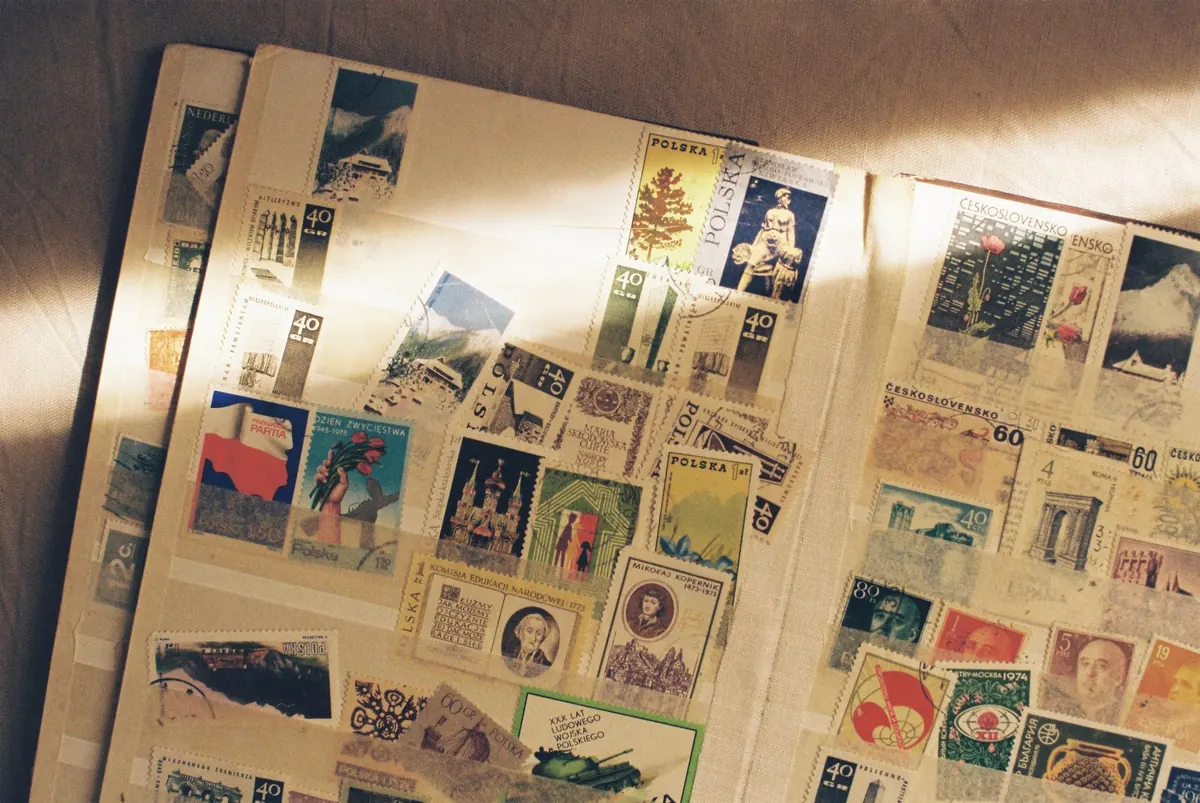
Hinged pages have a flat, uniform, slightly austere look. Stamps sit flush against the paper and a densely hinged page reads almost like a printed plate — which is exactly why classic used collections and old single-country albums still look so good. The trade-off is that a hinged mint stamp never quite shows off; you can see the hinge peeking above the top perforations.
Mounted pages have depth. Each stamp sits proud of the page with a shadow beneath it, and a black-backed mount makes perforations and white margins stand out sharply. It is the display standard for exhibition and for high-value material. Mounts are also unforgiving: they must be trimmed square, aligned consistently, and sized correctly, or a page looks cramped and improvised.
One practical note: mixing the two on a single page rarely looks deliberate. Keep hinged and mounted material in separate albums, or at least in separate sections.
A rough working guide:
Hinge what is replaceable. Mount what is not.
If you are building a used collection of a single country, hinges will serve you well for decades and cost almost nothing. If you are buying mint material, or anything you might one day sell, mounts protect both the stamp and your money. When a collection grows in value, it is entirely reasonable to migrate the best items into mounts over time — one page at a time, at your own pace. And if the material is significant enough that condition grades affect its worth, have it assessed by a qualified dealer or philatelic society before you alter anything, and check that your insurance reflects what you actually hold.
Photo: Ahsen / Pexels